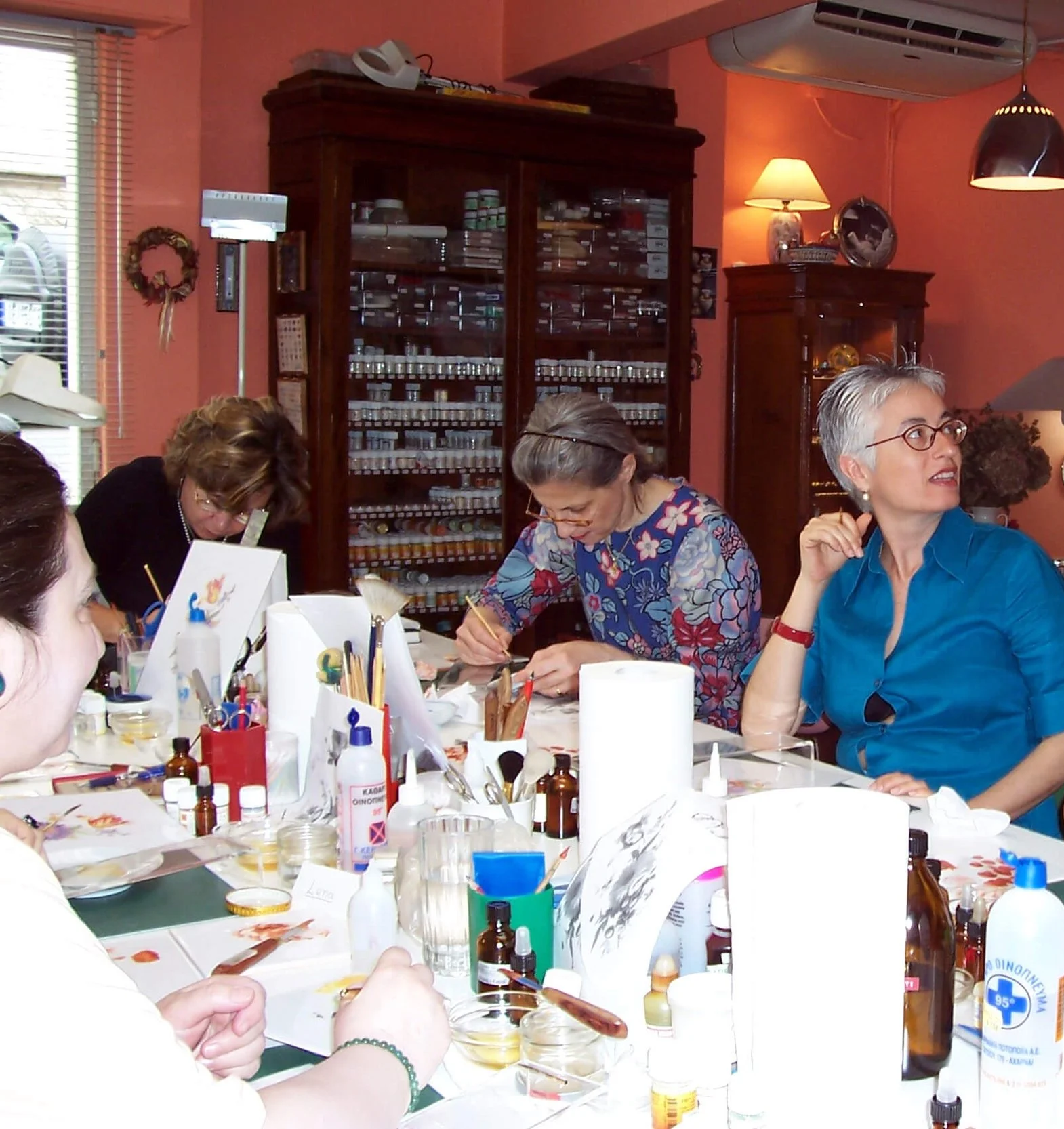
The School
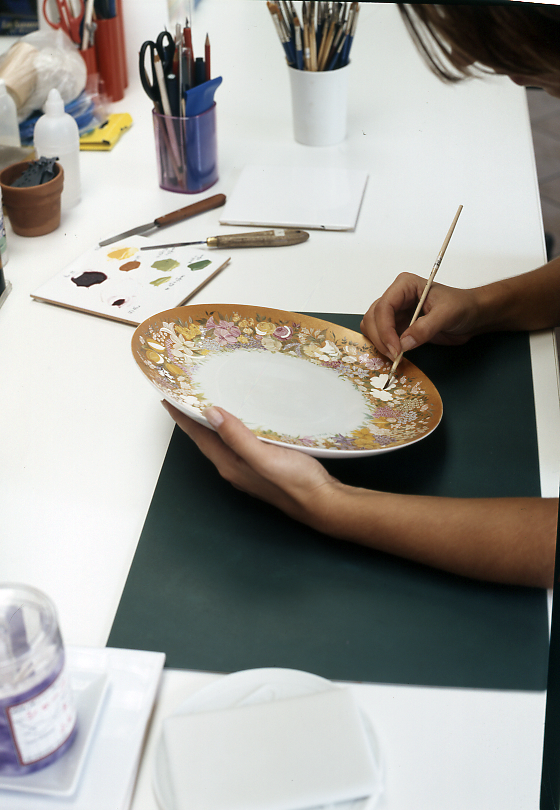
At The School, Marilena Patronicola introduced porcelain painting as a living craft, taught with clear structure, close guidance, and deep respect for tradition. Students began with a complete Basic Course Cycle, where they learned the fundamentals of overglaze porcelain painting step by step: from colour preparation and brush control to floral motifs, borders, gold and platinum, and firing. For those interested the journey continued through Repetitive Courses designed for practice and refinement, alongside specialised Seminars that introduced contemporary techniques and international influences. Together, they supported each student in developing their skills, strengthening their confidence, and gradually shaping a personal artistic language.
Scroll to Explore the Structure
BASIC COURSE CYCLE
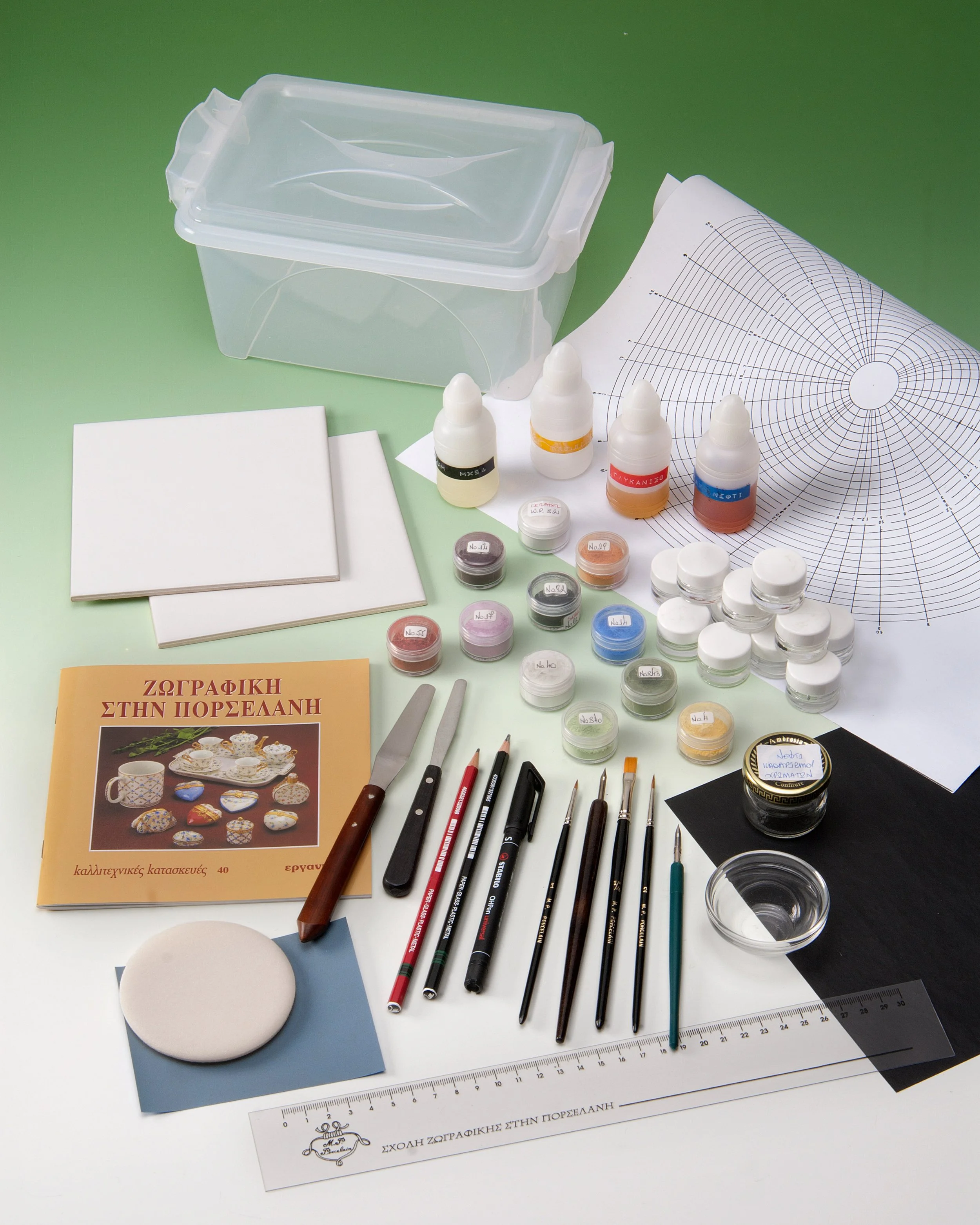
Starter Kit!
Marilena Patronicola taught herself the basic course cycle, designed to convey the classic art of porcelain painting applied on top of the glaze. Throughout the course, she explored every step of this traditional technique, guiding students through its history, methods, and expressive possibilities.
The program began with a brief look at the origins and evolution of porcelain painting and continued with an introduction to colour categories and preparation. Participants learned how to prepare, clean, and partition their objects, followed by the special techniques of colour mixing and brush handling. Gradually, they developed control through the first strokes and small floral motifs, before advancing to more intricate techniques such as pen work, the application of gold and platinum, and the creation of decorative borders, stripes, and painted backgrounds.
Each course also introduced Camaieux the art of painting in a single colourand the use of transfers (decalques), culminating with basic kiln-firing instructions. Over the course of twelve three-hour lessons, held weekly over a three-month cycle, students steadily built both technical skill and creative confidence.
Classes were offered in small groups of up to seven participants, ensuring personal guidance and attention. Upon completing the cycle, each student received a certificate of studies. The tuition fee included a complete personal kit—paints, mediums, brushes—as well as course materials, porcelain objects for practice, and free firing of their decorated pieces during and for three months after the course.
The basic course cycle was presented in Greek, and students from diverse backgrounds were welcome to experience the timeless art of porcelain painting.
REPETITIVE COURSES
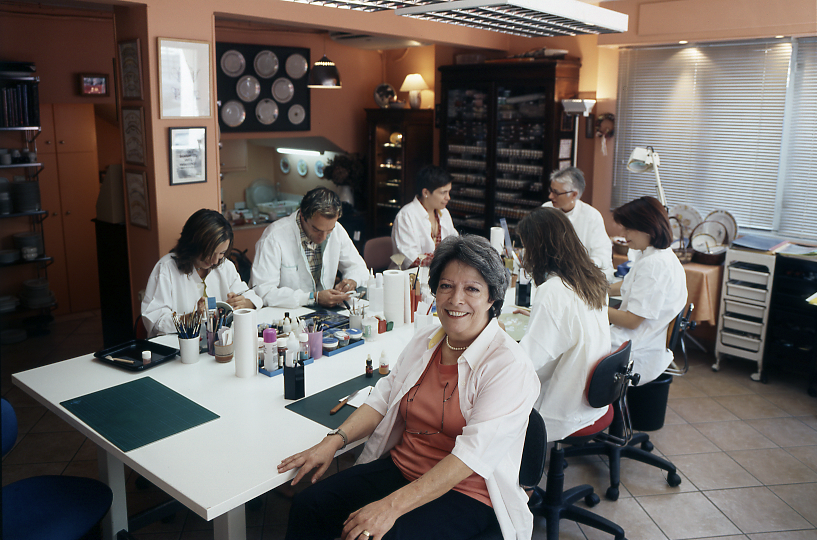
After completing the basic course cycle, students who wished to deepen or refresh their skills had the opportunity to join one or more repetitive courses held in the evenings. In these focused sessions, they could revisit specific parts of the basic program that interested them most, discuss their work in a friendly atmosphere, and receive personalised advice on technical and artistic issues related to porcelain painting.
The repetitive courses also opened a space for exploration beyond the fundamentals. Participants could discover modern techniques in porcelain painting, such as Kratz oil, and learn how to paint handmade porcelain jewellery, adding a contemporary and wearable dimension to their artistic practice.
Each repetitive course was charged separately and did not include materials or firing. The courses took place between September and July each year, offering students regular opportunities to return to the studio, refine their technique, and continue their creative development over time.
SEMINARS
After completing the basic course cycle, students who wished to delve further into porcelain painting had the chance to join a variety of seminars devoted to contemporary techniques and materials from around the world. These seminars created a space for experimentation, inspiration, and artistic growth beyond the foundations of the regular courses.
Each seminar unfolded over up to six sessions of three hours, allowing ample time to explore new themes in depth while working on personal projects. Groups remained small, with a minimum of three participants, cost not including materials or firing, so that students could freely choose the quality and type of supplies that best suited their artistic vision.
The topics covered in these seminars were diverse and often highly specialised. Subjects ranged from “American Look”, birds, and butterflies to lustres, reliefs, glassand mat and metallic colours, as well as glass painting seminars and surfaces that imitated marble, malachite, lapis lazuli, wood, and other materials. Through these themes, participants discovered new ways to enrich the surface of porcelain and to tell more complex visual stories.
Over the years, several of the most important porcelain artists in the world have already shared their expertise in our school’s seminars. Among them were Antoinette Schaerrer-Topalidis and Efi Mpegnis, whose presence offered students a rare opportunity to learn directly from internationally recognised masters and to connect with the wider porcelain painting community.